Before, During, and After Sex...and the City
Over this past spring I’ve thought quite a lot about how womanhood was presented to me throughout my childhood. I grew up in a predominantly female household and went to an all girls school for 8 years. Although I sometimes slipped up on my fair share of ‘feminine qualifiers’ I was awash in a sea of ‘girl power’ slogans. Despite all that I still look back and think that nothing truly prepared me to face the world quite as well as television did. Although the title of this blog post is a nod to the major role HBO’s Sex and the City had in my “grown folks” education, I’d already had clandestine peeks into the adult lives of women because I’d been nursed at the teet of network television.
Outside of the strong Black women who helped raise me within my nuclear and extended family, it was largely media portrayals of sisterhood that helped shape my concepts around gender, sex, and sexual orientation. It’s still hard to pinpoint exactly where my expectation that relationships be filled with high-key drama, plot twists, backstabbing and cliffhangers came from. Thank you long running soap operas and primetime drama (General Hospital! Sisters! Melrose Place!)
I’m convinced that due to the pandemic I’ve consumed way more streaming media in the past year alone than I ever did in my youth. It started out innocently enough: dipping my toe into shows that centered the voices and experiences of contemporary womxn. Shows such as hulu’s Shrill and High Fidelity made me feel like a nostalgia-voyeur for a way of life that had literally just been snatched from under me.
Admittedly the high key anxieties of the protagonists for those shows hit a little too close to home and so I then slowly meandered back to shows that I’d watched in my youth. Back then, Buffy Summers and Veronica Mars helped me map out the 90s/early aught badass woman I thought I’d naturally mature into. Sure they had “problems” ( slaying things that go bump in the night and solving the murder of your best friend, eyeroll eyeroll) but every teen thinks that their world resides over the hell mouth. Nevermind that the actors portraying these screen teens were in their twenties.
A growing theme here— as I’m sure you’ve figured out— is that the protagonists of most of these shows are primarily white women or in the case of High Fidelity, a very light-skinned black woman. In my youth I definitely watched shows that had black women in the spotlight, but not necessarily as the main characters. I gleaned something of Black womanhood from them, but they were also often situational comedies with large heteronormative ensemble casts (A Different World! Family Matters! Martin!). And there’s a big gap between laughing along with highjinks and sobering up for the occasional race/gender/sex PSA episode for thirty minutes at a time vs. a thirty or forty-five minute show that doesn’t center non white/non male/non heteronormative voices consistently.
Sex and the City (SatC, 1998-2004) can be described as having flouted many of those societal norms in a funny and flirty way, but also still maintained narrow viewpoints re: race, gender, and sexuality. Since it was announced that SatC would be returning to our screens, I’ve thought a bit more about what other shows existed before and during SatC that also skirted social norms. These television shows were not about a conventional albeit dysfunctional family unit or couple (All in the Family! Good Times! Sanford and Son! The Jeffersons!). Nor were they that brand of 70’s/80s show featuring quirky cohabitation setups (The Odd Couple! Perfect Strangers! Three’s Company! Webster!) or murky familial lines between paid help and middle/upper class families (Benson! Charles in Charge! Who's the Boss!).
The shows below managed to center womxn protagonists sometimes all on their own and other times in relief to/juxtaposition to other community ties (be they familial/neighborly/parental etc). This exploration, of course then also led me to womxn-led projects across the globe for whom SatC’ s impact is undeniable; having taken up the mantle of brunches, sexuality, stifling gender roles, more brunches, fashion, food, and friends. Role credits please:
Before Sex…
i.e The Legends
(thank you reruns!)
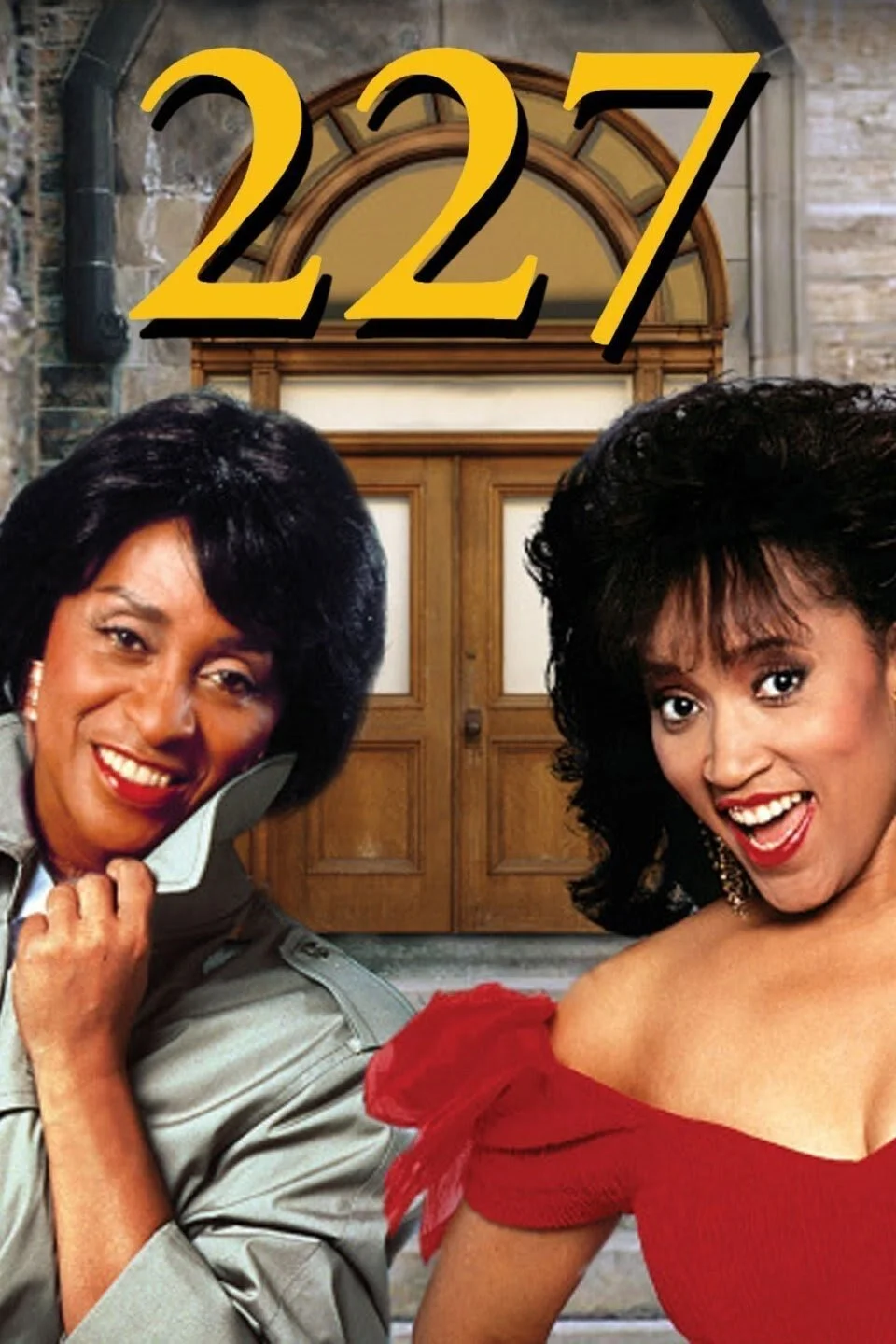
227 (1985-1990)
Set in Washington D.C the show centered around neighbors in a small apartment building 227 Lexington Place. Everyone was in everyone’s business and although living different lifestyles and exchanging varying viewpoints on the day’s issues, life at 227 was a glimpse into middle class Black community building. The Jenkins’s (Marla Gibbs, Hal Williams, an a young Regina King) were neighbors to Sandra Clark (the incomparable Jackee Harris) and Pearl Shay (Helen Martin) along with other characters. The single and always ready to mingle Sandra Clark character was always a revelation in black female sexuality for me.
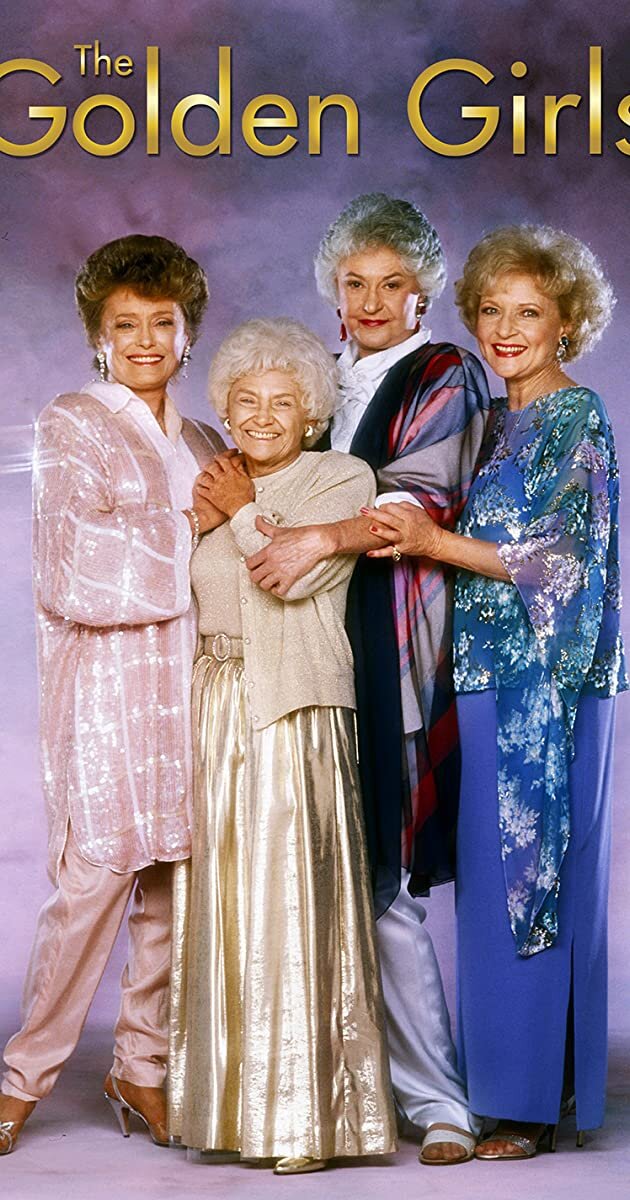
Golden Girls (1985-1992)
The biddies in GG were similar to those on 227, except of course for race. All four Golden Girls were more than roommates, they were friends/family along the journey post menopause. There was the relentless flirt Blanch (Rue Maclanahan), the older sassy matriarch Sophia (Estelle Getty),the sensible one Dorothy (screen queen Bea Arthur), and the naive one Rose ( the legendary Betty White). The camp of Golden Girls was matched with the pastel backdrop of Miami and the shoulder-padded power of 80’s fashion, and it remains iconic in its showcasing of sisterhood. (available on hulu/youtube)
Designing Women (1986-1993)
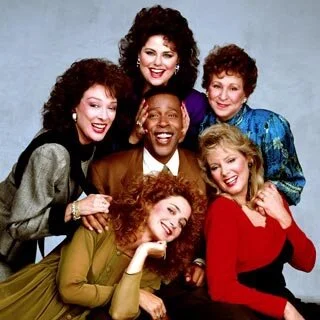
I didn’t watch too much of Designing Women’s reruns but when I did I loved how it dove into the inner workings of running a small business with several women at the helm. Set in Atlanta Georgia, the interior design firm was again mainly run by several liberal white women, who to their credit hired the young black law student, Anthony Bouvier (Meshach Taylor) as first a delivery person and then a design partner, despite his past as a former convict. Although all of the characters juggled careers, family and dating lives the show did not shy away from talking about the financial aspects of running a business.
During Sex…
i.e. The Contemporaries
Living Single (1993-1998)
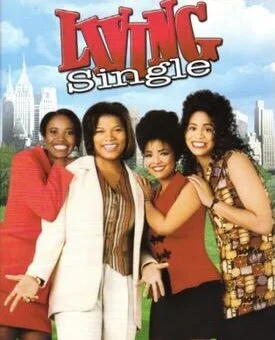
Living Single is largely about life in a brownstone in Brooklyn, and so was literally a portend into my future. Living Single once again plays up on established tropes in the lives of four singles, but with a focus on Black women navigating a big city, love, and work. There’s the sensible entrepreneur Khadija (Queen Latifah), the sassy smartass and Lawyer Maxine (Erika Alexander), the endearingly clueless aspiring actress Sinclair (Kim Cole) and the artistic sexpot Regine (Kim Fields). Along with their upstairs neighbors and love interests Kyle the stockbroker (T.C Carson) and Ovalton the handyman (John Henson). Although the tv show Friends is often thought of as quintessential NYC 90’s, Living Single broke many molds and did so with an arguably more diverse guest cast. (The series is available to stream on Hulu)
Girlfriends (2000-2008)
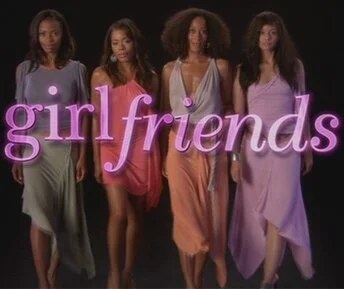
Set out in Los Angeles, Girlfriends captured some of that SatC and Living Single energy but with a distinct West Coast vibe, and pared down for network tv audiences. The four female friends were less hardlined to distinct tropes but they sort of created their own lanes. Joan (Tracee Ellis Ross) a lawyer is the main protagonist and in the early years frequently broke the fourth wall. Toni (Jill Marie Jones) a real estate agent is Joan’s childhood friend, but with whom she has a falling out in later seasons. It was refreshing to see a storyline of sisterhooding that didn’t tie neatly into a bow. Lynn (Persia White) is the resident free spirit, who accumulates degrees like candy and Maya (Golden Brooks) starts off as Joan’s assistant from south central LA, but who becomes a novelist by the series’ end.
Hey Monie! (2003)
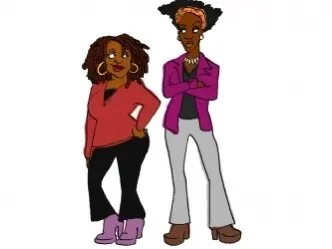
Hey Monie was an adult cartoon that aired on BET for x episodes. Simone aka “Monie” (voiced by Angela V Shelton) and her friend Yvette (voiced by Frances Callier) live in the same apartment complex in Chicago where she works in public relations. We get to see her navigate work and love in the windy city. I think that because it was a cartoon, it appealed to that “I’m not a girl, not yet a woman” Britney vibe and it blew my teenage mind that a Black woman could be neurotic and funny and ambitious. The very first episode has us seeing Monie and Yvette gunning for free tickets to see the Oprah Winfry show live and is literally the ultimate testament to what true sisterhooding looks like. (You can see all of the episodes (less than 20 minutes each) on youtube here)
Interlude
I’m among the more cautious of us who is only just now awakening from the hazy spring of 2020—feeling like it never really left. Stepping back into the world has meant embracing change once again: change in the weather, romance, self care and socializing. To that effect here’s some new tunes and a new t-shirt to commemorate these aspects of change in the last year:

Tap image for Spotify playlist

After Sex…
i.e. The Legacies
Now to distill the following shows to SaTC character tropes is to gloss over the finer points of each show’s global perspectives, yet nevertheless they certainly owe a great deal to the original HBO show. Some of the shows take after SATC’s narrative and production elements, and others (actually almost all of them) highlight contemporary fashion designers in their respective regions.
An African City (2014-2016)
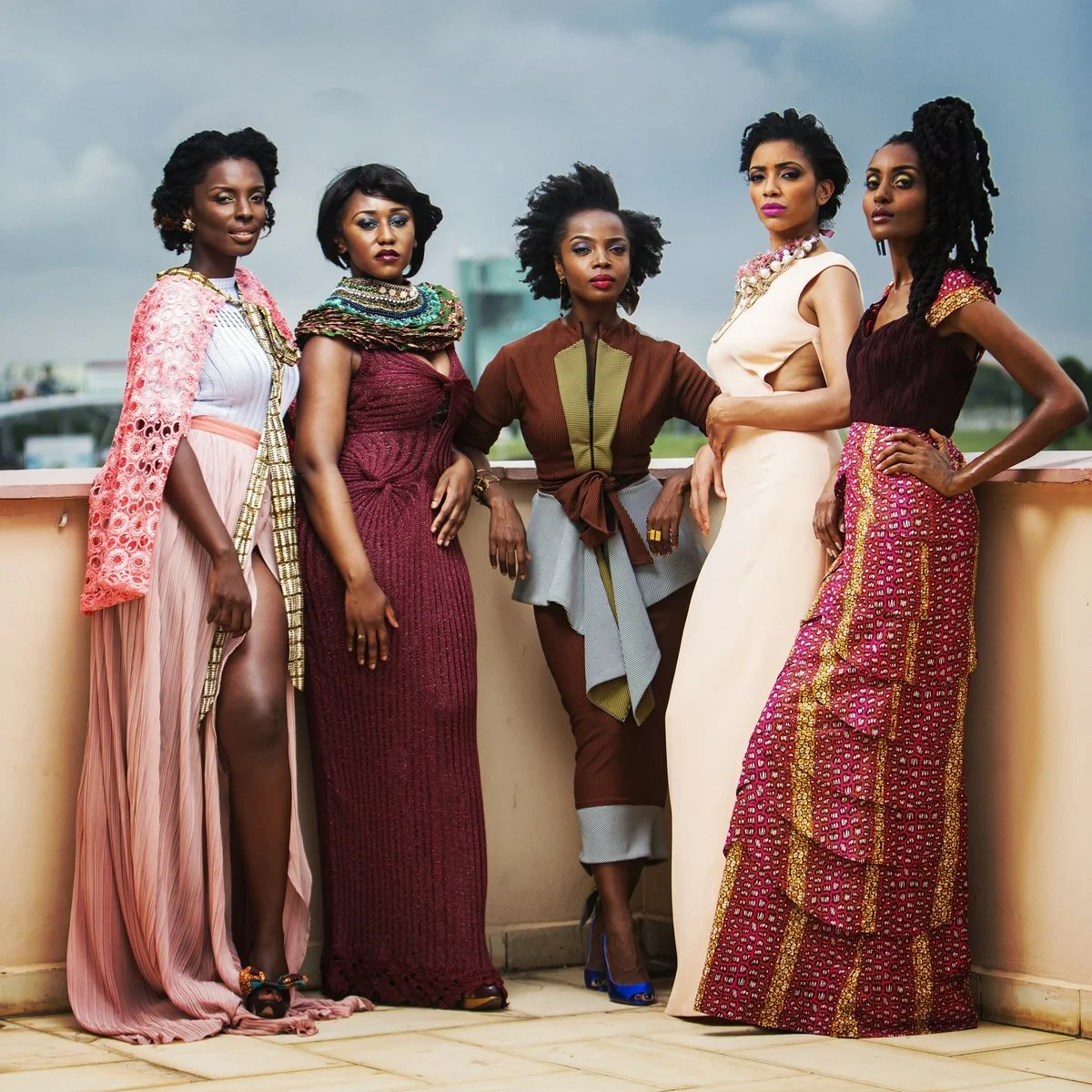
Set in Accra, Ghana “An African City” is the brainchild of Nicole Amartefio, and is about 5 friends who have recently restarted their lives in the African metropolis. There’s great meme quality content about food and sex, and what it would take to make an African man to perform cunnilingus, so you can’t say I didn’t warn you. There’s Sade ( Nana Mensah) who is the Samantha-adjacent femme fatale of the group for her outspoken liberal viewpoints and promiscuity; the Carrie of the group, is Nana Yaa (Maame Yaa Boafo) a journalist and thus the main narrative voice of the series. Makena (Marie Humbert) is the closest to the group's Miranda because she is a lawyer who is already divorced when introduced to us; and there is Ngozi (Esosa E) who is like the televangelist version of Charlotte; and finally there is Zainab (Maame Adjei) who is a workaholic entrepreneur, who perhaps has traits of all the SATC women.
The first season is available on youtube, and the 2nd season is available via a one-off subscription to the main website. The fashion on the show is epic and features designers such as Christie Brown, Chemphe Bea, Wanna Sambo, Archel of Bombchel boutique. The format of the show as a web series was paramount to Amartefio’s vision of accessibility to an afropolitan narrative for African women worldwide. We’d love to see the show launch as a studio-backed production ala Issa Rae’s journey from Diary of an Awkward Black Girl on youtube to Insecure on HBO though. And as you’ll see from the next three examples, their creators got backed from jump, by the likes of Amazon and Netflix. Come through for An African City!
Four More Shots Please (2019… )
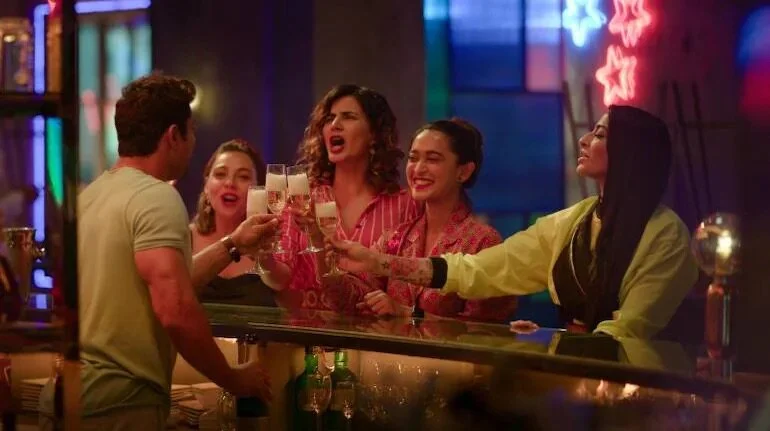
Set in Mumbai, Four More Shots please is sort of like SATC meets Friends/Cheers in that the central four women patronize one wateringhole in particular--with the popular and titular tagline repeated cheekily. I will say the show had me at first blush when introduced to Dee’s character in the midst of a fantasy with her male gynecologist. The fashion on the show is glamorous yet accessible and the settings all pull you in as a viewer. The series main ”Carrie”character, Damini Rizvi Roy "Dee"(Sayani Gupta) is an investigative journalist ; the requisite “Miranda” character is Anjana Menon "Anj"(Kirti Kulhari), a lawyer and divorced mother; the comparable “Charlotte” character is Sidhi Patel "Sids"(Maanvi Gagroo), a sheltered child from a wealthy family; last up is Umang Singh "Mangs" (Bani J) who is a bisexual gym trainer .
Umang’s character is not a direct map onto the “Samantha” trope because that trope is sort of shared amongst all four characters. Rather, Umang, as a woman in a relationship with another woman, is controversial not for promiscuity. To even hint at non-heteronormative patriarchial love and sex is kind of a big deal, not just in India but for any of these non-western shows. Directed by Anu Menon and Nupur Asthana, both seasons of the series are available on Amazon prime video.
Sexy Central (2019…)
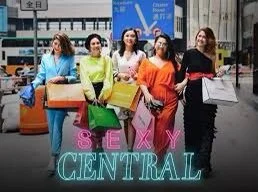
Set in Hong Kong, pre protests, the five main characters are navigating all the familiar tropes of balancing their professional and private lives in a metropolis. Similar to SaTC’s earlier seasons, the show has short interview clips with people asking about dating and sex in Hong Kong. Like Four More Shots Please, alcohol is a plot point and comes up for at least one of the characters.
Priscilla is the main protagonist, deciding between new and old love; Sunny is a pre-school teacher by day and a free-spirited Americanized party girl by night, which sometimes gets her into trouble;; Annie has a naive Charlotte quality to her, and her main story arc centers around an old online flame/catfish and she enlists Olivia to help her avoid exposure. Francis works under the high pressure and demands of her family business and as a result likes to let loose however she can.
The five protagonists are all well dressed and well seasoned globetrotters, which is another theme of these non-western SATC legacies. Although I’ve watched all episodes, I couldn’t find any online synopsis that would help me recall the characters by name and actor, but the show’s director is listed as Kam-Keung Chan on IMDB. (Season 1 was released in two parts via Netflix)
Valeria (2020…)
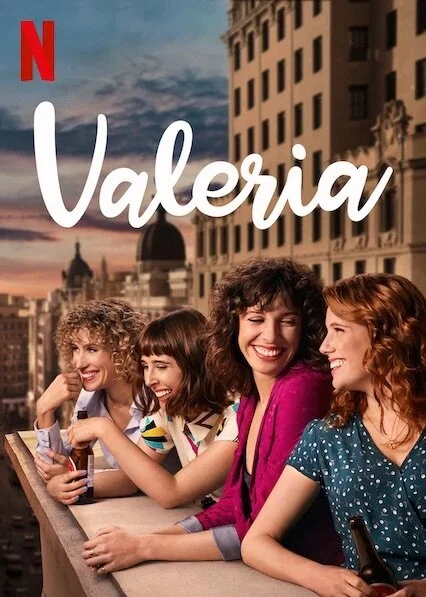
Set in Madrid, Spain, the series Carrie-esque center is Valeria (Diana Gomez) a writer that feels stuck creatively and also in her marriage. Similar to SATC being based on Candice Bushell novels, Valeria is based on the novels of Elísabet Benavent. The show’s comedic elements definitely kept me cringe-laughing, but it's almost therapeutic to watch someone else’s life unravel and be put back together without too many repercussions. If Valeria can make it so can you. Along on their own journeys are Lola (Silma Lopez) is the Samantha-esque sex-positive character looking to have fun and avoid the messy entanglements of falling in love; Carmen (Paula Malia ) is the Charlotte-esque prude looking to get more worldly experience and come out from her shell; and Nerea (Teresa Riott) is a little harder to pin-down in the SATC trope, but is the Lawyer, budding feminist and lesbian of the group. As a show set in Spain, her character feels less controversial, but sadly still an unexpected character trope. The protagonists fashion is approachable, with hints of glamor.
(Season 1 is available to stream on Netflix)