Abstract Guidance: Y.O.R Part 3
These are things that will help you have a great time during The Year of Return if they are utilized in all of your interactions. They are more like frameworks through which you can mindfully experience all that Ghana has to offer.
*Openness *
I thought this would be an easy post to write but in some ways its been the hardest since it seems the most intangible yet obvious. “Just be open to new experiences,” she said annoyingly. As I wrote in the first post of this series, going home can hold much weight and expectation. But by now, you're probably noticing a pattern with these abstract guidance posts. Having patience and appearing ingeniously flexible leads into the idea that openness to new experiences requires letting go of old assumptions about people, places, and even time.
I want to remind you that this advice is coming from someone born and raised in the Bronx, New York which is notoriously known as inhospitable. So you can trust me.
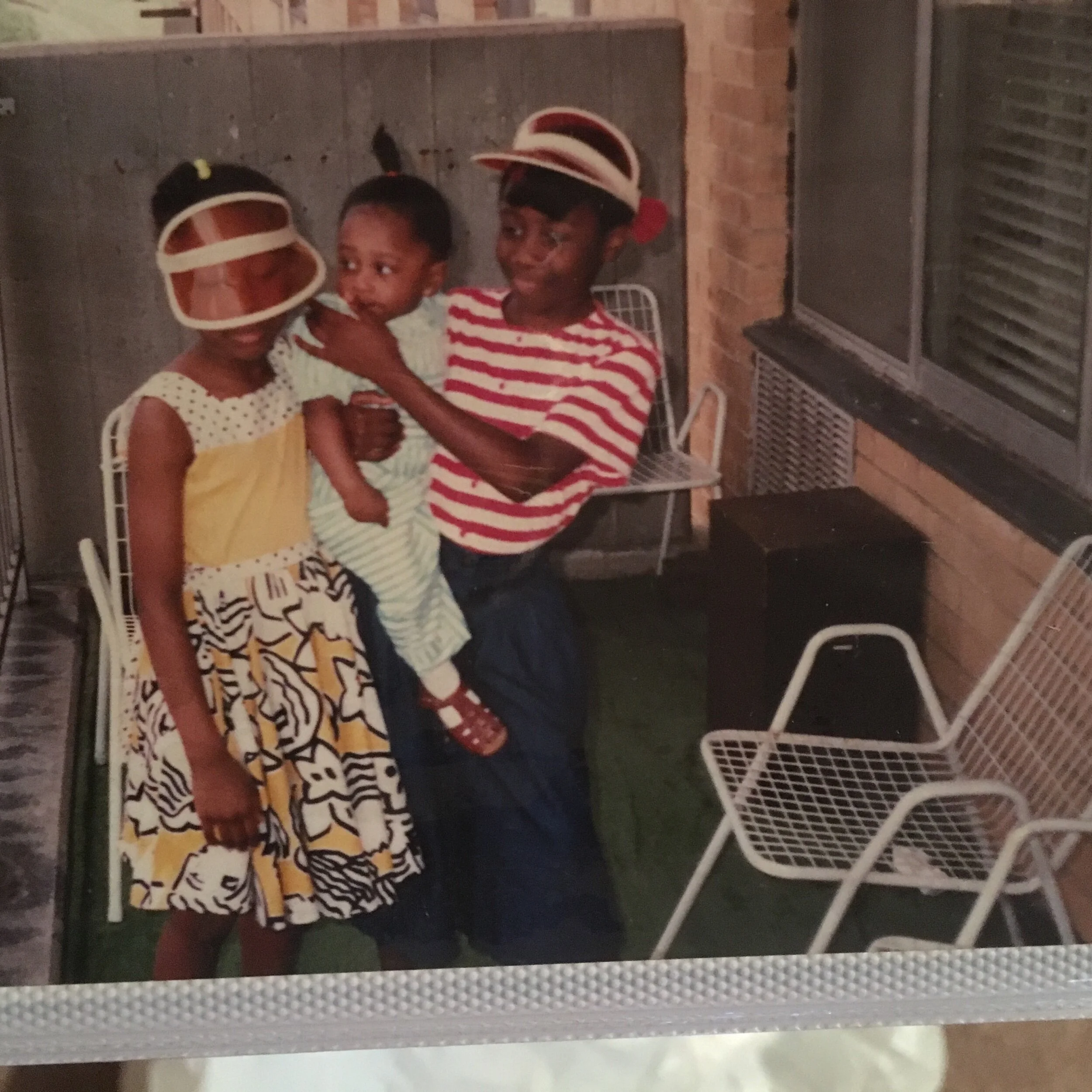
You can almost feel that open Bronx breeze…we’re clearly about to play croquet or some such off the 11th floor balcony…
Openness addresses creating space in order for community to happen; for people and ideas to converge without fear. Which means that all sorts of perspectives and wavelengths and energies meet. For me, growing up in the Bronx there was a freedom and openness that came from the small Ghanain community that lived in the same apartment complex as my family. An openness that to a kid/teen felt like everyone was in your business so you could never step out of line. Because both actual aunties and mostly fake aunties were seemingly everywhere. For my parents’ generation, that openness extended to a wider network of Ghanaians whom they had grown up with and who had also emigrated.
So, if you have found yourself in Ghana this holiday season, no matter how long or short the stay, then you are most likely looking for community in some form too.
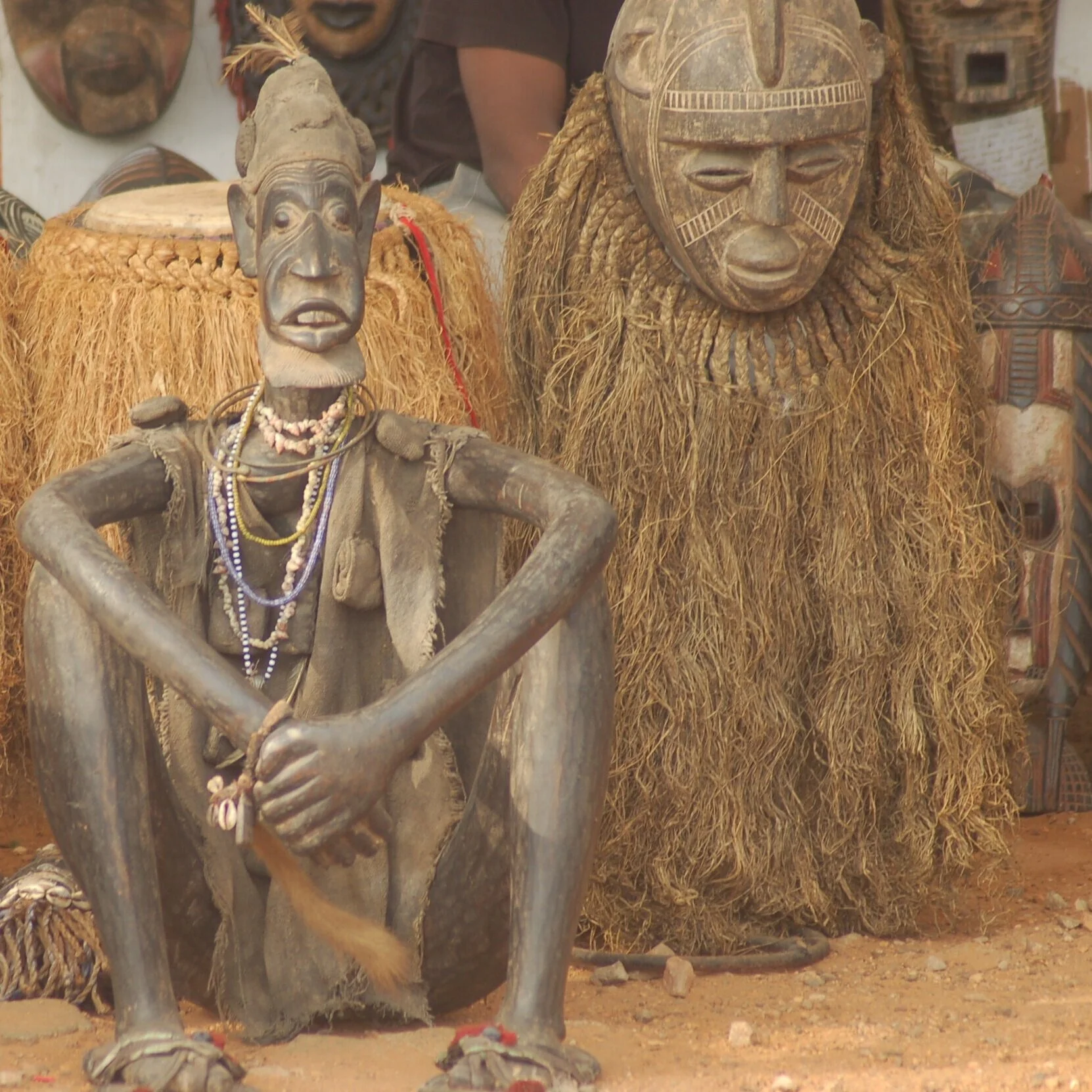
Waiting for the Masquerade … photo credit: Nana Adom Brempon( IG @kiss_deezy)
When meeting a new culture, no matter how familiar it might seem/feel/ smell/taste an actual openness of spirit is important. And in Ghana —and Africa generally as the birthplace of humanity— it feels good to acknowledge that this earth and soil has been lived upon, bled upon, built upon, and buried within. That there are forces larger than us at work no matter if you believe in God, gods or a higher power with whom you commune. Here, regardless of all that, you can commune with nature as well as with society. Nature takes you as you are and you can stand in awe of it,while society is often a bit more complex.

Fuzzy but on the right it says “God First”
While in Ghana, you will see a lot of references to Christianity in your day-to-day from the names of small businesses to the backs of Tro Tros. You are likely to hear the far reaching call of the Muezzin at prayer times throughout the city. Just as you can count on fiery preachings from churches large and small via megaphones. At a recent photo shoot my friend Chris and I were talking about how the sounds of Accra are so distinct, especially the calling of town names used to identify where Tro Tros are going as they pick up people from sunup to sunset.
Whether the good God-fearing people of Ghana admit to it or not, spirituality is folded into almost everything here. Ghanaians are superstitious is what I am trying to get at. Honestly, I was raised a Episcopalian and up until my early 20’s the closest I ever felt to God happened on a solo trip to northern Ghana where I stayed with artisans in the small village of Sirigu.
I was feeling elated having seen a family of elephants at Mole National Park earlier and also feeling terrified about staying alone in the off-season guest houses. But literally, all I had to do was look up at the bright open night sky and calm flooded me. I remember praying not out of haste or fear or want, but just feeling thanks for being a part of it all.
In the next and final post I’ll talk a little bit about history and historical sites as a means of honoring what we’re all a part of. So when it comes to openness, I’ve often had to remind myself that there is an average level of understanding and therefore acceptance/acknowledgement (or lack there of) among Ghanaians (and West Africans more generally) about how the diaspora came into being based on various schooling, religious, and colonial legacies. So this “suggestion” of openness is not only for those that are returning to Ghana but for those who are based in Ghana as well.
Born and bred Ghanains, unlike New Yorkers, are raised to be “open” in terms of being hospitable/welcoming (Akwaaba!). This openness means that people also speak freely and “openly”. In the spirit of lenience or allowing assumptions to slide, know that people might call you black-American or some version of Ablotsii(Ga)/Abrotsiri (Twi) loosely translating to foreigner/someone from abroad or Obroni(Twi)/Blofonyo (Ga) as in white person…from white person land (loose less accurate usage/translation!). I used to feel a bit stung by this, but in general, do not be too alarmed at the different ways people might try to get your attention or describe you. They don’t know you. So the openness factor comes into play in a sort of “Each One-Teach One” methodology.
* smooth move: if someone calls you Obroni, say you are Obibini and see what they say…
Some Suggestions on Ways to Practice Openness:
I would welcome just introducing yourself by name. People tend to respond favorably to that as a way of starting conversations. Names are important here because they can impart a lot of information about family, place of birth, status, etc. By starting with your own name and its importance to you, you get to impart whatever information you want.
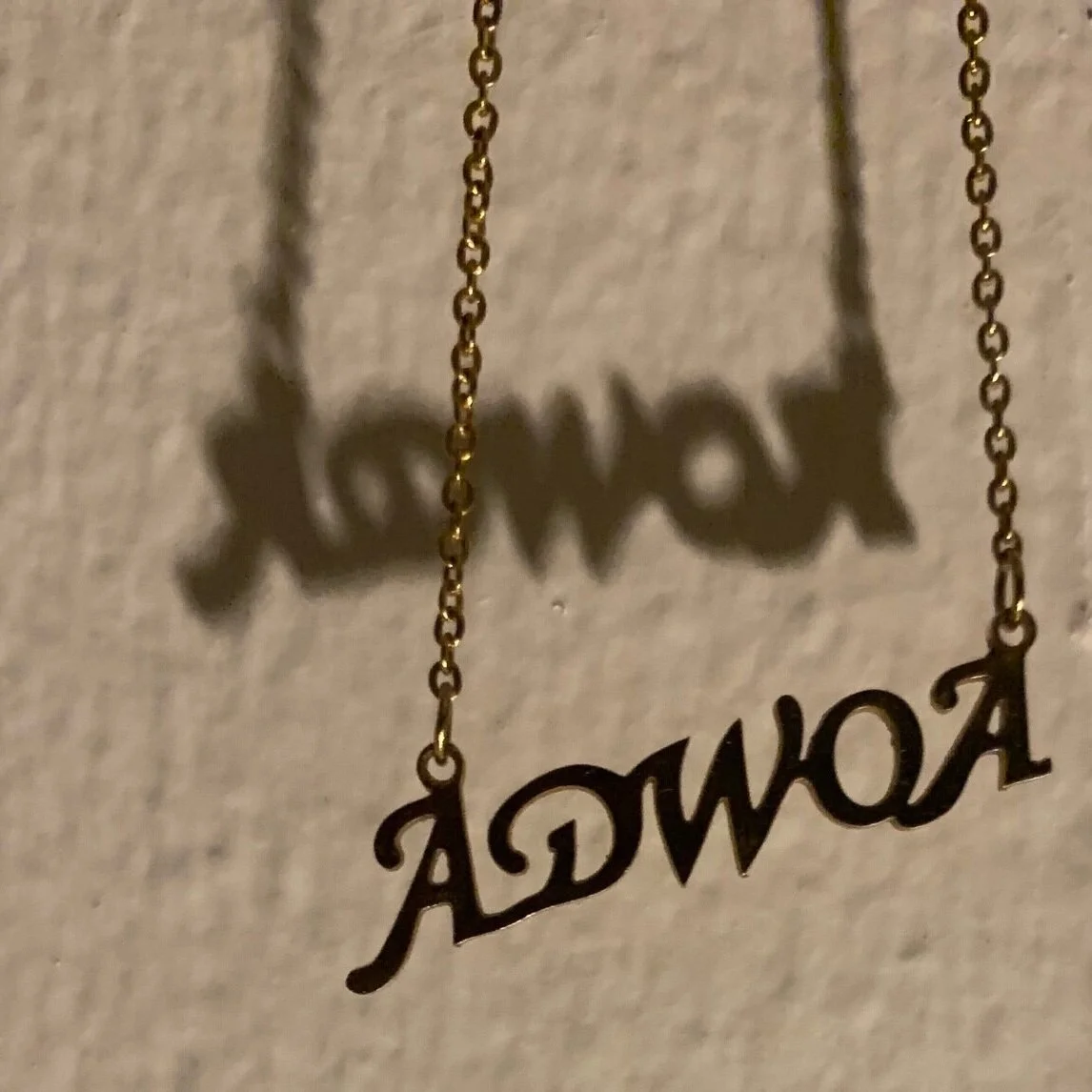
Me by another name… photo credit: Ohemaa Serwaa
On that note, if you know what day of the week you were born, you can ask for help with your Akan day name. Or if you already know your day name then you can introduce yourself that way and see if people play the name-game/who-are-you-related-to game. Growing up, one of the most often asked question by non-Ghanaians was “what does your name mean?” and “have you ever been/how often have you gone [in reference to Ghana]” and from Ghanaians it was “Do you know—-?” or “How is auntie —-?”. So, welcome to these riveting conversations.

Merch soon come
Practice that first Abstract Guidance of “Patience”. If you understand one of the local dialects or you are with someone who does (and who doesn’t mind translating because you are curious) you will soon come to know that Ghanaians are observers. Which is a nice way of saying that yes, sometimes they are talking about you as if you are not there. Everything from remarks about how well you speak English, how well (or awful) you speak [insert Ghanaian dialect here] —but of course saying that in another dialect you might not understand— to your physical fitness or lack thereof, your hair, how objectively pretty/handsome you are, and my least favorite: what your ‘coloring’ is! Inhale...Exhale...
I want to round up this post about openness with the admission that my own naïveté and assumptions about the overall character of Ghana and Ghanains was embarrassingly predominant until my early 20s, even though I had experienced a bit of summer-in-Ghana sponsored rebellion in my youth. For me, Ghana was so distant from the violence, danger, inequality and escapism to which being black in America had become synonymous in my mind. I’m saying that once I realized that weed grew-a-plenty in Ghana and that there were libations like Palmwine and Akpeteshie (a locally made moonshine basically) the blindfolds were off and it became a whole new place.

I mean all of the parties that we kids were dragged to in the Bronx suddenly made more sense. Making community takes understanding and sometimes a little something to take the edge off of all the assumptions. So pour one out (honor the ancestral spirits) and try to hold onto #Blackgirljoy #blackchildjoy #blackboyjoy for as long as possible. Don’t lean heavy into naïveté like me, but tap straight into the joy that openness can bring.
~Ohemaa Serwaa