Food as Formative
I held my first Friendsgiving in my apartment here in Brooklyn this year. I wanted to gather with friends and family in gratitude for what has been a formative year not only personally, but for WoBusu as well. The guise was to “Gorge and Get Gorgeous” for a “Feast and Fete” whereby I ply my guests with libation and gluttony and then have them dress up in WoBusu accessories and create a lookbook (forthcoming). Basically a perfect meet of Halloween costuming and Thanksgiving camaraderie.
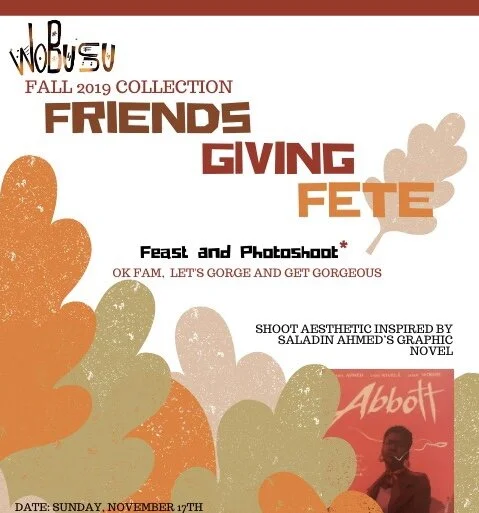
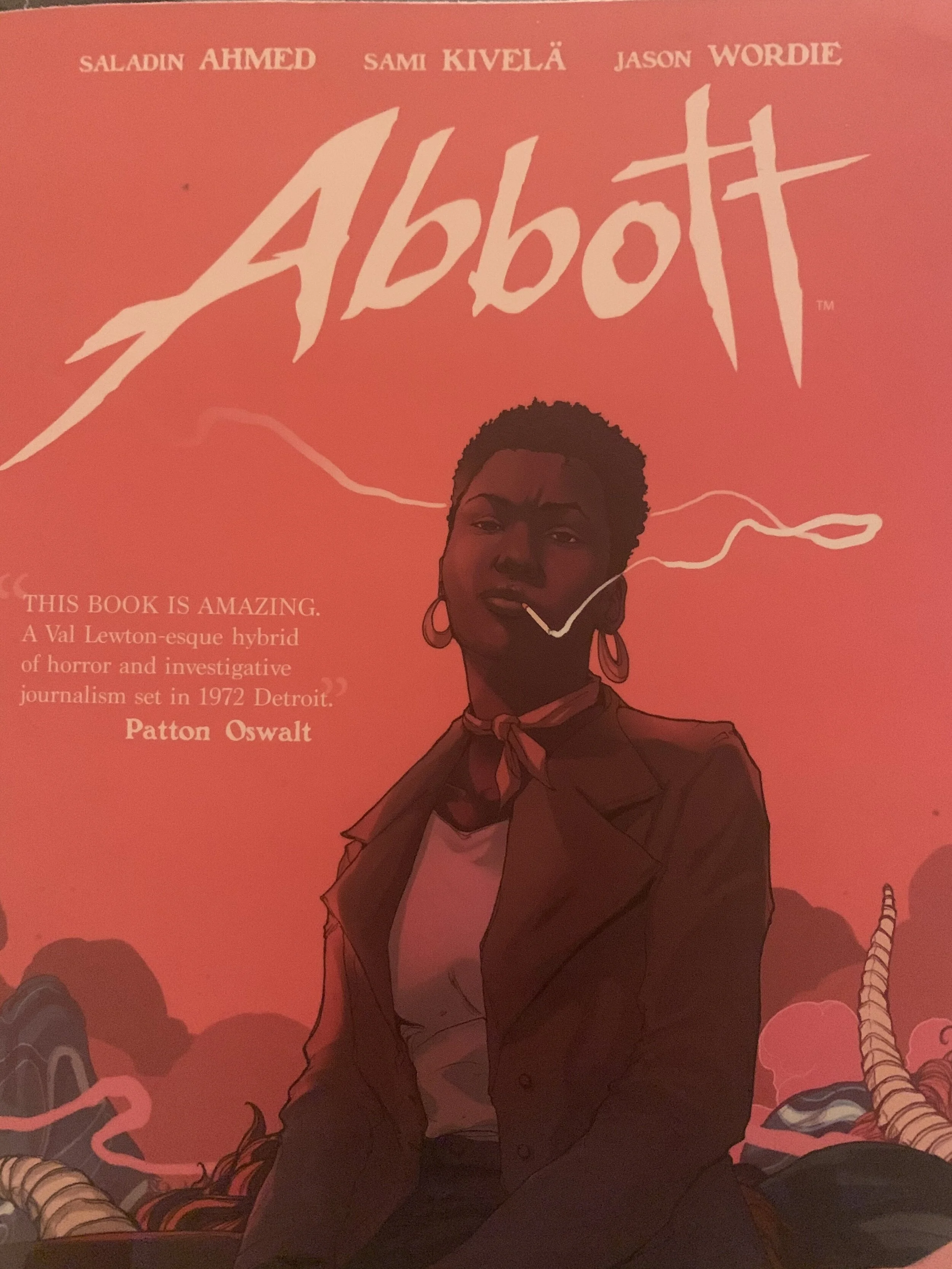
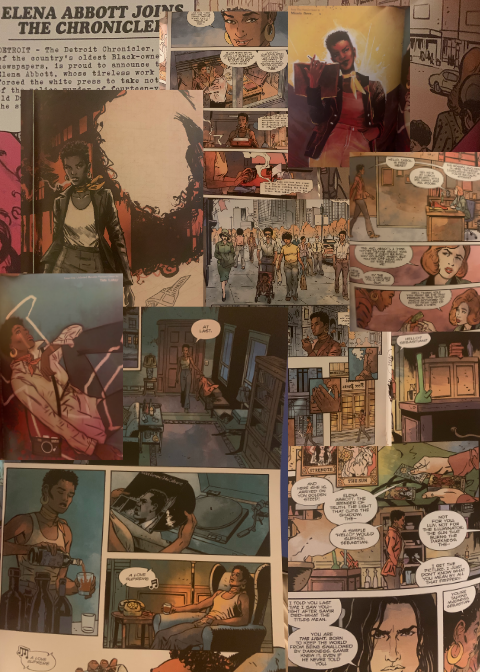
The inspiration for the photoshoot was Saladin Ahmed’s graphic novel “Abbott” about a badass reporter in 1972 Detroit. I loved the overall vibe that artist Sami Kivela uses to portray the inner turmoil of Elena Abbott and a deeply divided city---along race, class, and gender lines. That, and the bold reds, umbers, and golds on the pages paired well with the hues of the Golden Harvest WoBusu collection. There will be more on those themes for another post.
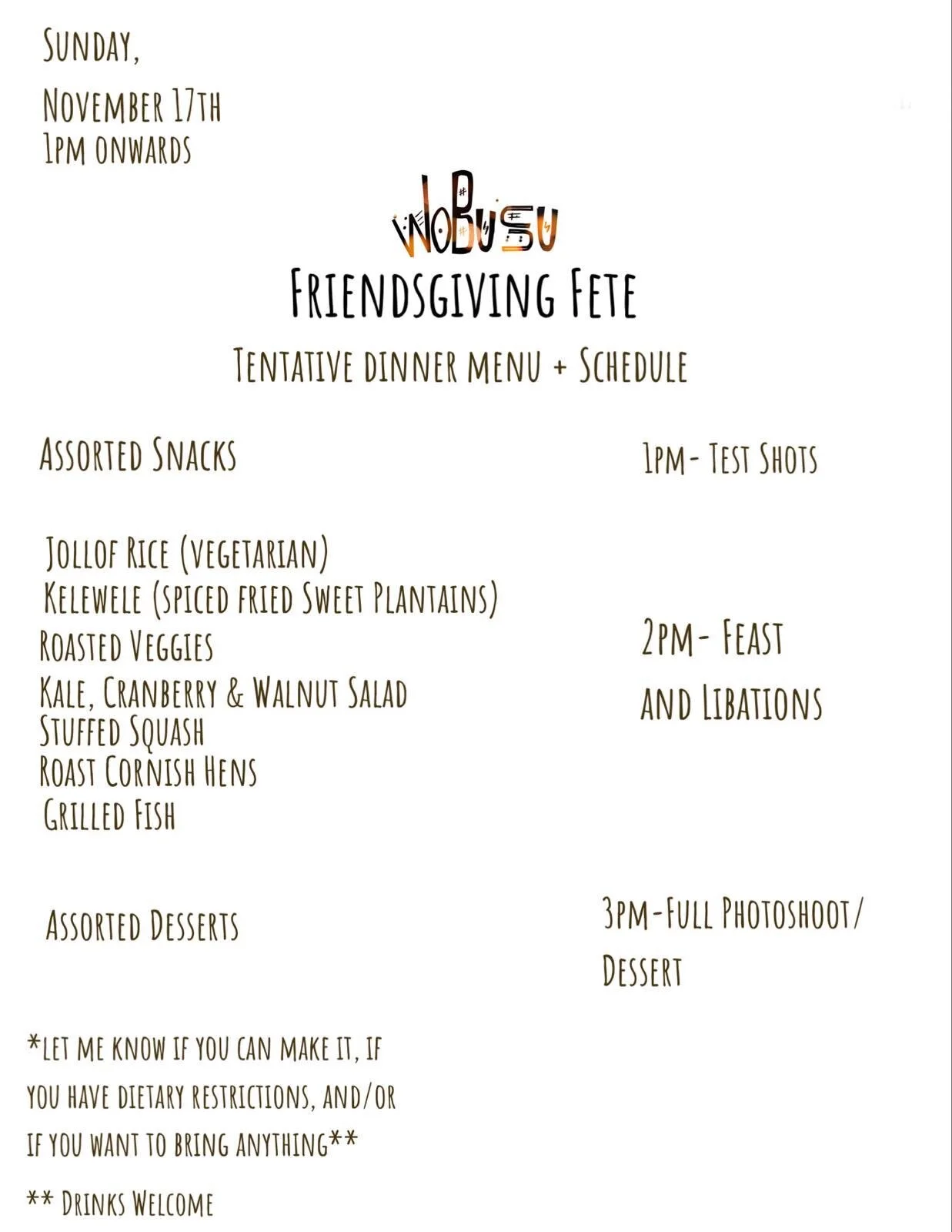
This post is a little bit about 1970s vibes but mainly about how Friendsgiving 2019 has been a jolt to my own culinary complacency. I decided I wanted to cook the whole Friendsgiving meal, with a nod to Ghanaian food and healthy Thanksgiving staples.
When I thought about cooking to sustain the interest of people with various dietary or religious restrictions, and in larger quantities than what I usually make, it made cooking for Friendsgiving a welcome challenge. It was more than just eating a shared meal, but gathering together and allowing space for difference both in terms of cultural backgrounds and taste palettes.
The 1970s also happens to be the decade my parents came together as a unit in America, and my ideas about that period are largely based off of their photographs from that time. As a young immigrant couple, they had to make do with little, but would often share whatever they had with their fellow Ghanaian ex-pats and students. My Mom recalls that she would often make large portions of Ghanaian staples for my dad and his friends.
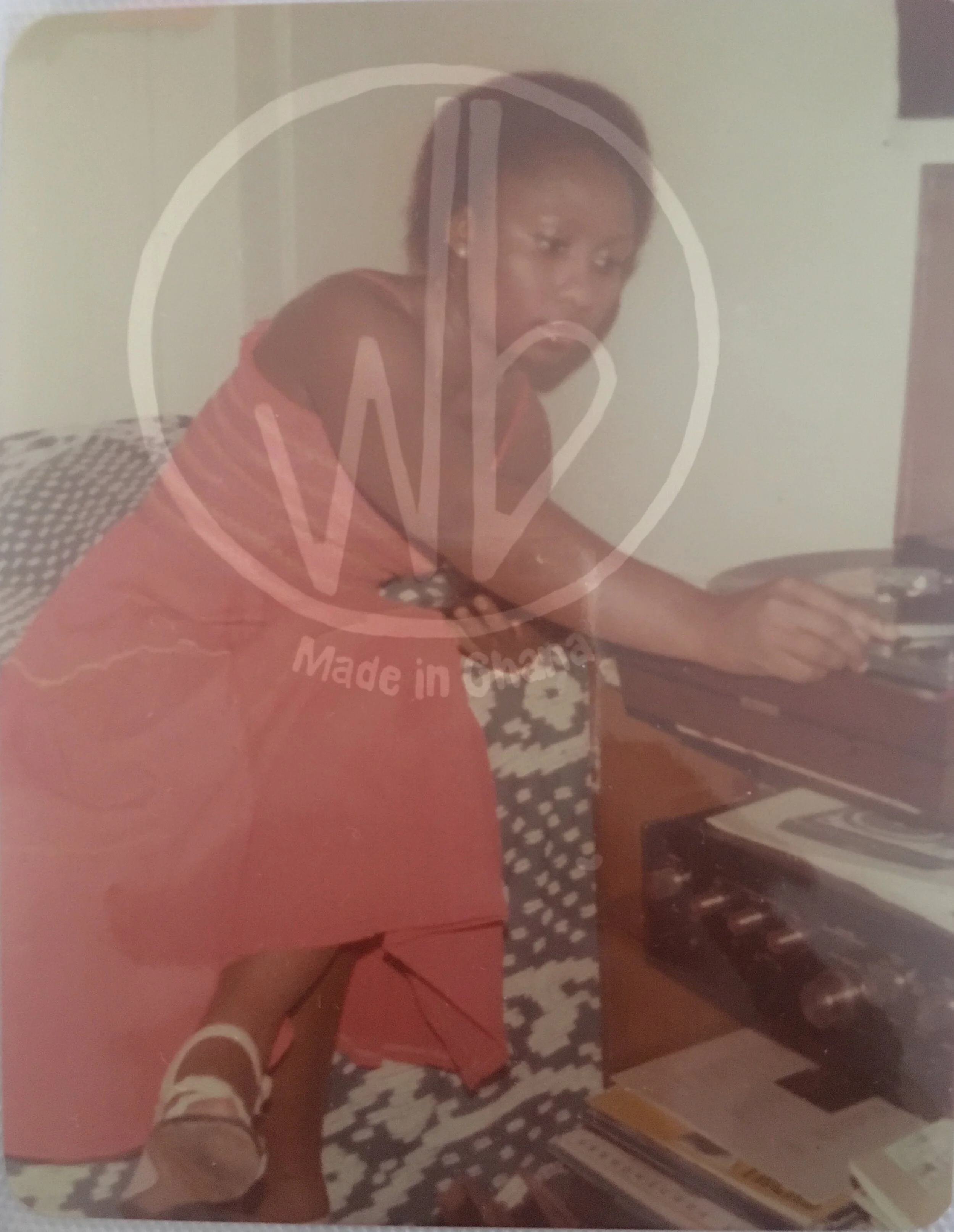
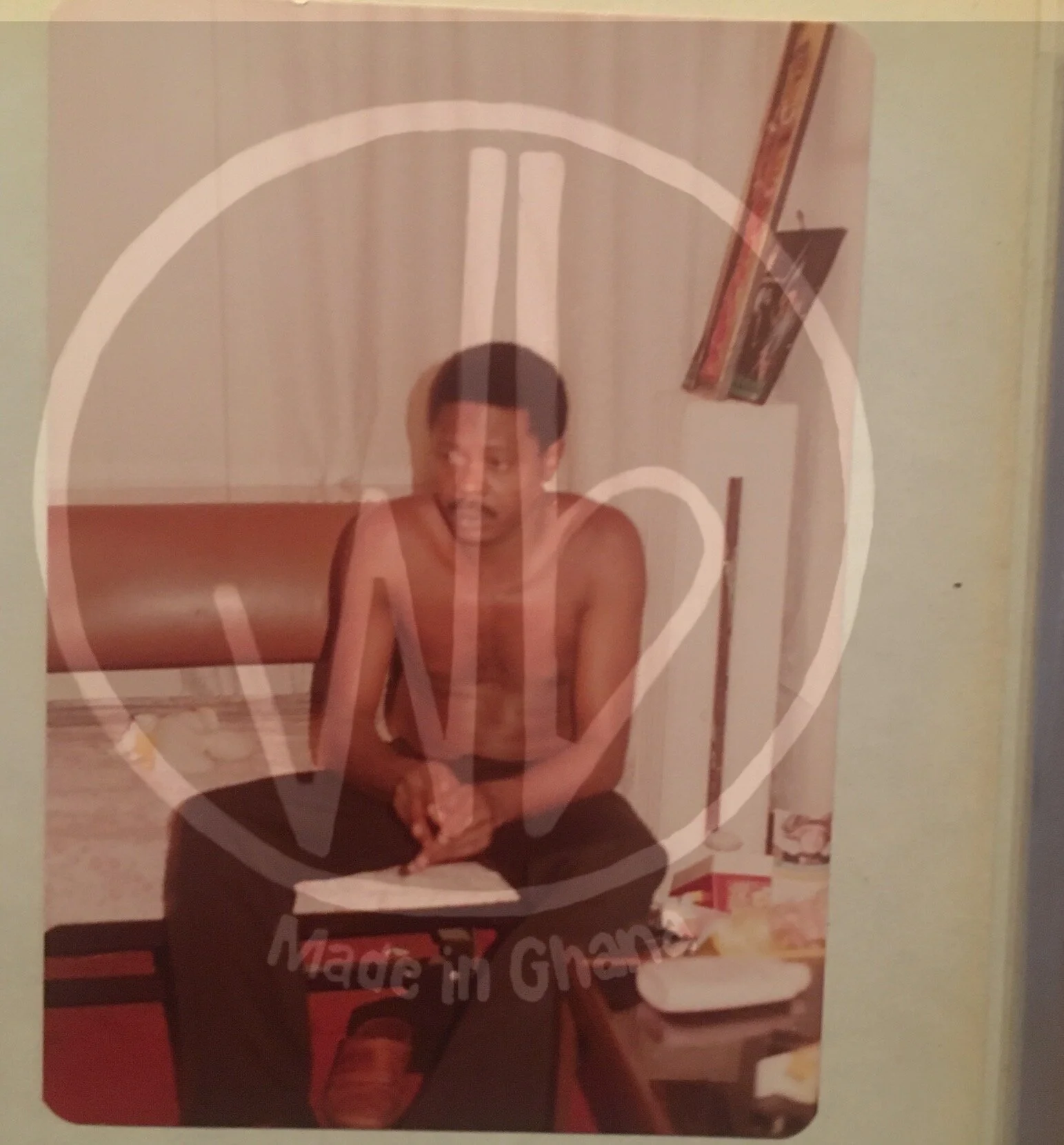
So this Friendsgiving has urged me to a personal cooking challenge. Over the next several weeks I’m going to add an element of Ghanaian dishes to my weekly meal prep. I mean, I rarely have time for full meal-prep as it is, doing it in fits and bursts. But I also rarely incorporate foods that have personal cultural meaning. That might not seem odd in this day and age, especially in America, but it is somewhat odd for me. When in Ghana, my ability to understand anything other than English is not the expected norm. The pervasive assumption being that to live outside of Ghana means to divest oneself of cultural markers (regardless of whether born in Ghana or of merely of Ghanaian heritage). But that’s not how I grew up. I mean, my father specifically didn’t give my sisters and me Christian names (not even middle names!) because he didn’t want us to feel pressured into forgetting where we came from. How is it that i’ve come to cook less and less “Ghanaian” meals?
When I think about Thanksgiving lots of conflicting feelings come to mind. As any made-up holiday, it should be open to reinterpretation from the static postcard that it has become. Collectively, and I don’t mean just in America or with American ex-pats, Thanksgiving resonates with people throughout the world; with born and bred Africans, Latinx, Asian and Caribbean folk.
I like to think that this is because Thanksgiving— as a pre-packaged yet aspirational holiday— is malleable beyond the whitewashing it has been subjected to from its onset. Like a family recipe, passed down through generations, we like to think it stays exactly the same without the whims of an individual cook’s taste. But good family recipes aren’t like that, and neither is Thanksgiving.
It seems hard to contemplate that we take a day off in November, not to acknowledge the erasure of the complex and bloodied histories that made colonial America possible or to condemn the continued costumed mockery of people subject to genocide. And even when we do take a moment to bring praise— to the bounties of the soil, or to the indigenous peoples for whom the soil was sacred, or even contemporaneously to the workers worldwide who labor (sometimes under inhumane practices/unfair laws) to bring food to our tables—sometimes that too feels disingenuous. Instead, we gather together in gratitude, because people around the world have celebrated harvests for millennia, and so that impulse still remains: overruling other conflicting feelings.
We’re gathering not to replicate the meals we’ve been told “symbolize” Thanksgiving, but we’re infusing them with all the cultures and foods of people who have made America what it is today. So many current Thanksgiving staples— cornbread, sweet potatoes, cranberry sauce— are additions and not likely to have been at the first feast. Because if today we were still only eating what was served in 1621, or even when it was repackaged as pre-civil war propaganda, I doubt the holiday would still be as appealing (or rather, as appetizing).
The Ga people of Ghana celebrate their harvest season of “Homowo” (which literally translates to “hunger tomorrow”) in August with a deep-orange-hued dish called “kpekple” or “kpokpoi”. Homowo Kpekple is made of dried cornmeal mixed together with palm-nut oil and served with and equally autumnal-colored palm nut soup. Although on first appearance, this harvest meal isn’t exactly full of variety, the large quantities served often require many hands to prepare them. It strikes me that without the cultivation of corn and the Native Americans that first harvested that crop thousands of years ago, Ga’s wouldn’t have this marker of annual celebration. It sounds like a cliche, but for better or worse, we are all connected through history. How we tell each other’s history or celebrate different cultures on a daily level will have ripples in the future.
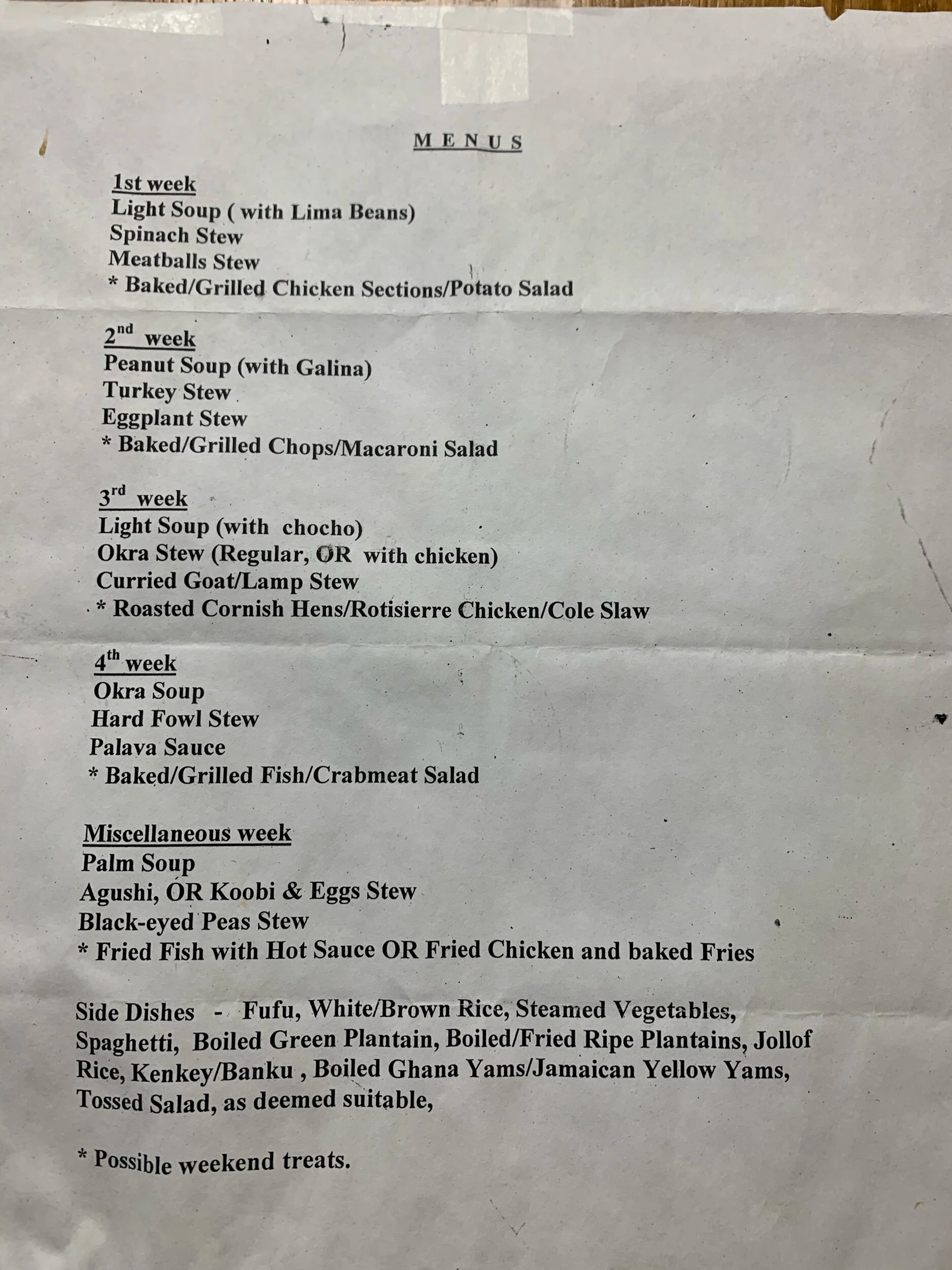
And so with my first Friendsgiving being the start of a culturally specific meal prep plan, I’m turning to a weekly menu breakdown that my mother created years ago. I remember a version of this tacked up in our kitchen in the Bronx when I was younger, and how she tried to play to the wandering tastes of three young Americans by including rich Ghanaian dishes. I won’t make everything listed, but the plan is to select 1 or 2 items each week and rotate. I’ll post updates to Instagram (@wobusu). Realistically, the menu was as much about convenience and efficacy as it was steady exposure to Ghanaian culture. Culture is food and food as culture. Are your meal preps already culturally specific or culturally inclusive? Are you prepping for just yourself or a lot of people? What are you go-toes and do you have any tips for maintaining quality as you increase quantity? How do you talk about agricultural production and food security?
~ Ohemaa Serwaa