Vim: Out of This World
I’m a librarian. I’m a librarian who holds a Master’s degree in Art History, and who is also an aspiring writer a writer and self-taught designer, a creative director of an accessories line, WoBusu. More often than not I inhabit all of these spaces despite feeling like I have to be tethered to just one of them. People tend to tell us to pick a lane and stay there. Pick one track and see it through ( I was a pretty fast sprinter in my day). And that can be helpful in making both small and large scale decisions for oneself. If you can have one thing that you master, wouldn’t you rather that, than to be paralyzed by choices? Yea, me neither.
We are asked from a young age, what we want to be when we grow up. How often were you absolutely certain? Even when I was a child I never said only one answer. I usually fidgeted between Dancer (oh yeah, right through to college) and Doctor—(nope!) Although I’m enough of a self-diagnosed hypochondriac to...self diagnose, I would never make real medical decisions because I couldn’t handle the squeamish parts of doctoring. So I leave all of that to the professionals thank you very much...unless we’re talking about general wellness, or like crystals, essential oils, supplements, exercise, astrology or hair care routines. Gah. I digress.
Luckily, no one (who mattered) ever told me I had to choose one thing. As I grew up and experienced more of the world, there seemed to be an exponential increase in the types of careers that I—as a black woman— could pursue. At least in theory. I mean it all came down to what jobs the world feasibly was offering me vs. what I felt I could offer the world. I could vision board with the best of them or have a clear outline of where in the Art world I wanted to be, but try as I might, I would fumble on the necessary steps to get to where I wanted to go. Did I actually know the right people to guide me? Did I look like and play the part of the ubiquitous gallerina of the early aughts? At dreaded networking events, could I overcome my anxiety and be as charming as I thought I was in my head? Would I not insert my foot into my mouth and fan-girl on every artist I admired?
Despite this, my love for (A)rt and creative expression always came first. Sometimes, the seeming abundance of choice felt crippling because this love never fully aligned with what was actually available for me out in the world. And so, like a good multitasker I dove into something that would ground me and all of my pursuits: a desire to give back and share my belief in the power of books led full circle to public librarianship. I was and am an introverted person, whose internal monologue was built through the power of words.
Oddly enough, the public library wasn’t necessarily the place where all this magic happened. As a tween especially, I thrived in the pages of authors like Louis Lowry, Ann Rinaldi, Judy Blume, V.C Andrews, Caroline B. Cooney, Garth Nix, Sandra Cisneros and any mildly salacious Baby Sitters Club book before graduating on to Edwidge Danticat, Junot Diaz, Arundhati Roy, and Gabriel Garcia Marquez. But it was school libraries that were more my jam, because they felt easier to get lost in or at least they seemed to have less distractions. Also, as the last of three girls I would often inherit my sisters’ books with their yellowing pages (V.C Andrews!) and doodled margins full of dog-eared importance.
But the best way for me to express my book love was at the annual end-of-school book sale. There, I felt like I had a semblance of control over what new futures and journeys I could embark on, picking through the tables of books and inhaling all that new book smell. The book sales signaled a summer filled with new characters to converse with...in my head. Whether traveling to a distant planet or mucking about in historical fiction I instinctively knew that I was allowed to be creative through a variety of personae, even if I was the only one appreciating my possibilities. From the outside, perhaps I was merely just the odd bespectacled black girl reading by herself.
Of late, I’ve been thinking about what it means to journey beyond what is concretely in front of you or the options offered to you. Whether that be in terms of physical and tangible boundaries (like books and borders) or those of a more philosophical and arbitrary societal nature (like access to basic human rights). This mental meander began during the summer’s 50th anniversary celebrations of the moon landing, but I almost don’t want to give it full credence. I feel like people of the African Diaspora have been dreaming of the unseen and the “not-of-this-earth” for a very long time, whether through inscriptive means or through storytelling. Reaching far past the moon even.
You can call it afrofuturism if that’s easier but for fear of co-optation or misappropriation I think it can’t fully be rendered in one title. It’s an inkling, a feeling, a new beat and rhythm, a fuzzy outline, a respect for the unknowable, and a certainty that multitudes exist within our imaginations. So below are some things that I’ve been mulling, creating my ongoing internal monologue: being able to envision beyond the moon, in spite of external expectations.
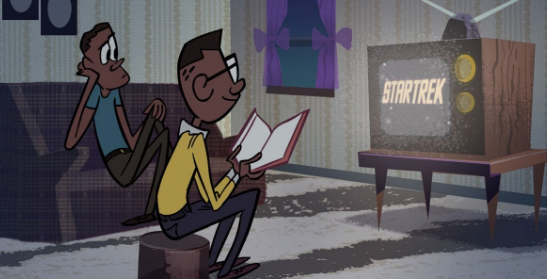
This whole summer I kept coming back to this Storycorps of the Late Astronaut Robert McNair’s earliest encounters with racism and segregation. It wasn’t a surprise to me that Robert experienced this at a public library in the 1950s because libraries are sometimes as much sponges or reflections of society, as they are the aspirational vehicles for change that they espouse to be. I did love the animation so captured the earnest naivete and imagination of youth that is so necessary for overcoming society’s arbitrary hurdles. It’s such a great story!
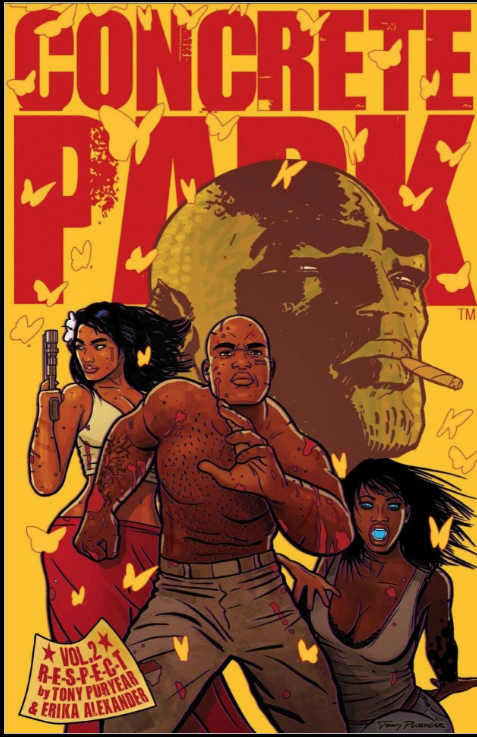
Vol. 2 of Concrete Park. by Tony Puryear and Erika Alexander
On a totally different note, in “The Rise and Fall of Black TV,” an episode of “The Nod” podcast, actor Erika Alexander (aka Maxine from Living Single, but also now on the CW’s Black Lighting) discussed being a black actor in the 1990s and the physical/mental toll of “stereotypical” black female roles from slave to sassy black friend. She also talks about the graphic novel she penned with partner, Robert Alexander, (+ Tony Puryear) in order to fill the creative void that typecasting created. “Concrete Park” is a sci-fi saga about earth’s marginalized rejects are criminalized and sent to a distant planet, where they must survive by any means necessary.
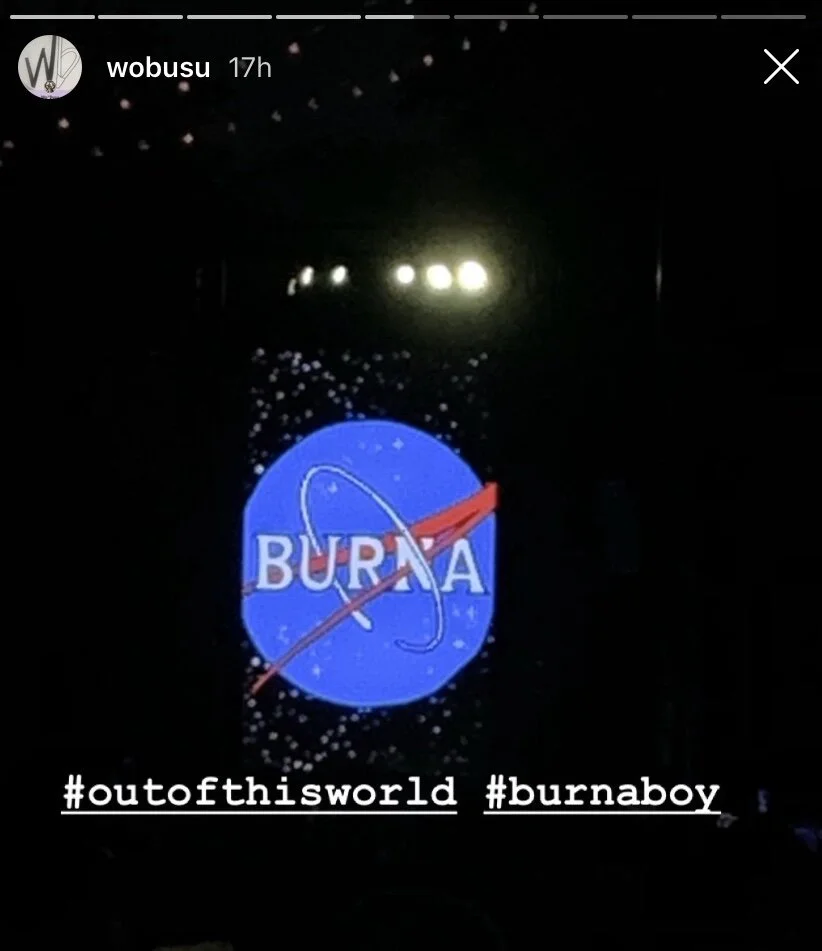
Burna Boy’s subdued yet exploratory Prospect Park performance in July 2019, before the official “African Giant” tour, where he was decidedly otherworldly. I can’t speak to the current tour, but musically he’s come a long way, so if you’ve been too busy stargazing to listen to the full album you definitely should.
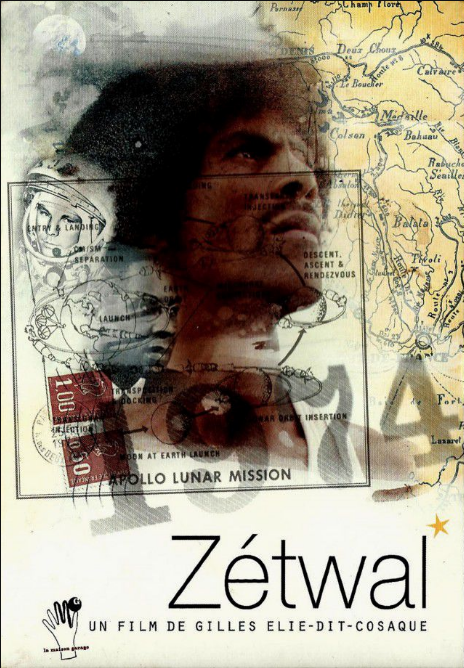
Gilles Ellie-dit-Cosaque’s 2008 film Zétwal (translated as “Twinkl”, but also “stars” in creole) about a Martinican man who wants to be the first Caribbean astronaut so he builds a patchwork metal spaceship to travel into outer space. Through a series of interviews of his friends and neighbors after he’s already set off to parts unknown, the the protagonists goals are both weighty and weightless.
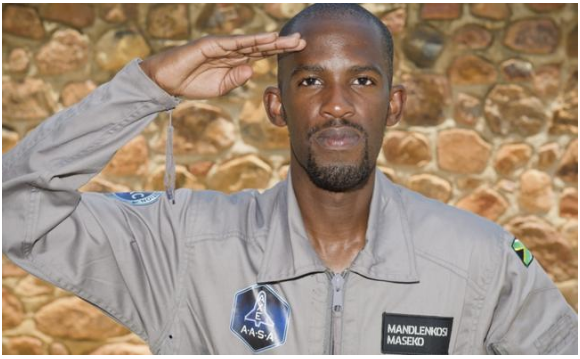
Mandla Maseko (image courtesy of wikisouthafrica.co.za)
The passing of Mandla Maseko in early summer 2019 after a motorcycle accident. Consistently headlined as the “would-be” South African astronaut, further reading of social media outpourings revealed he was more than just a ‘would-be’. Set to be first black African in space after winning a contest in 2014 sponsored by a private space academy, Maseko did a lot for his communities.
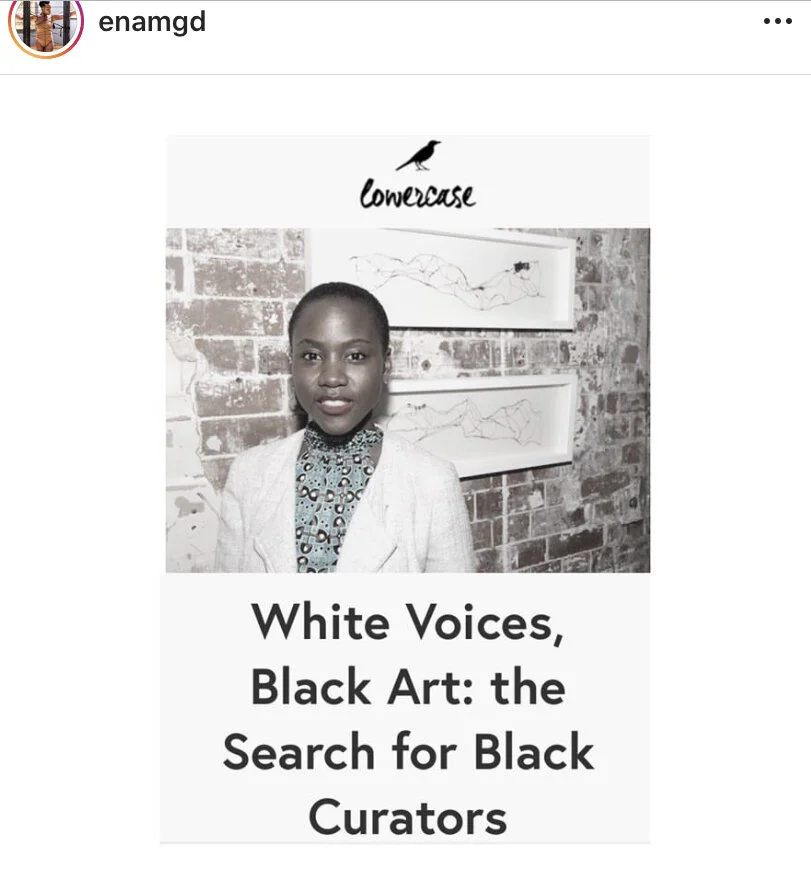
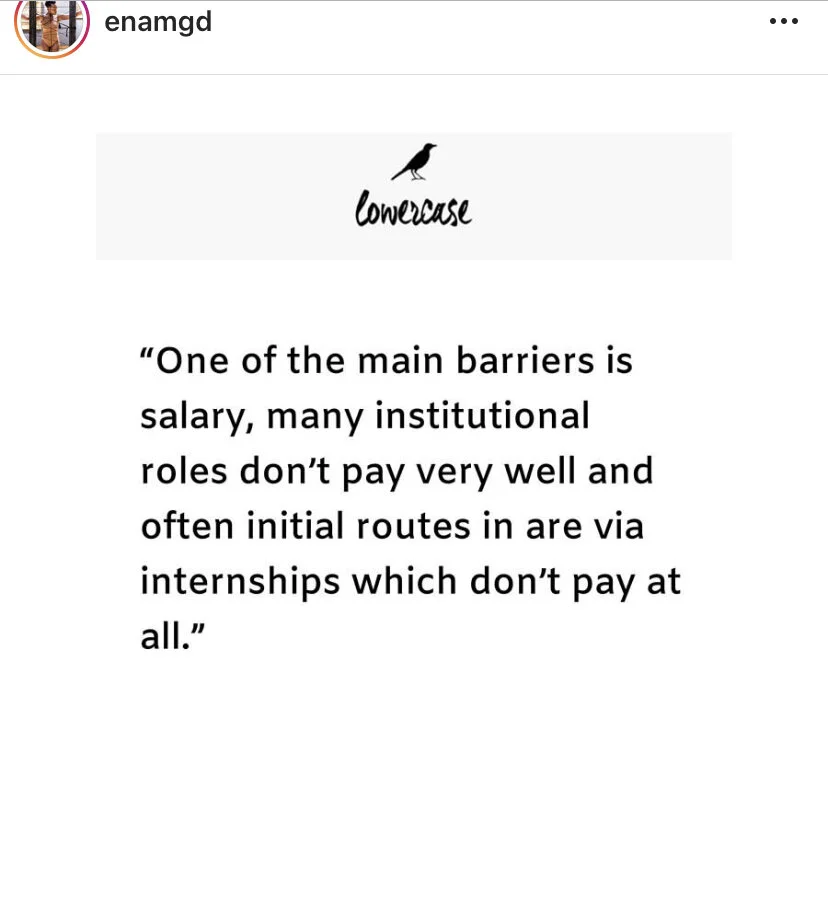
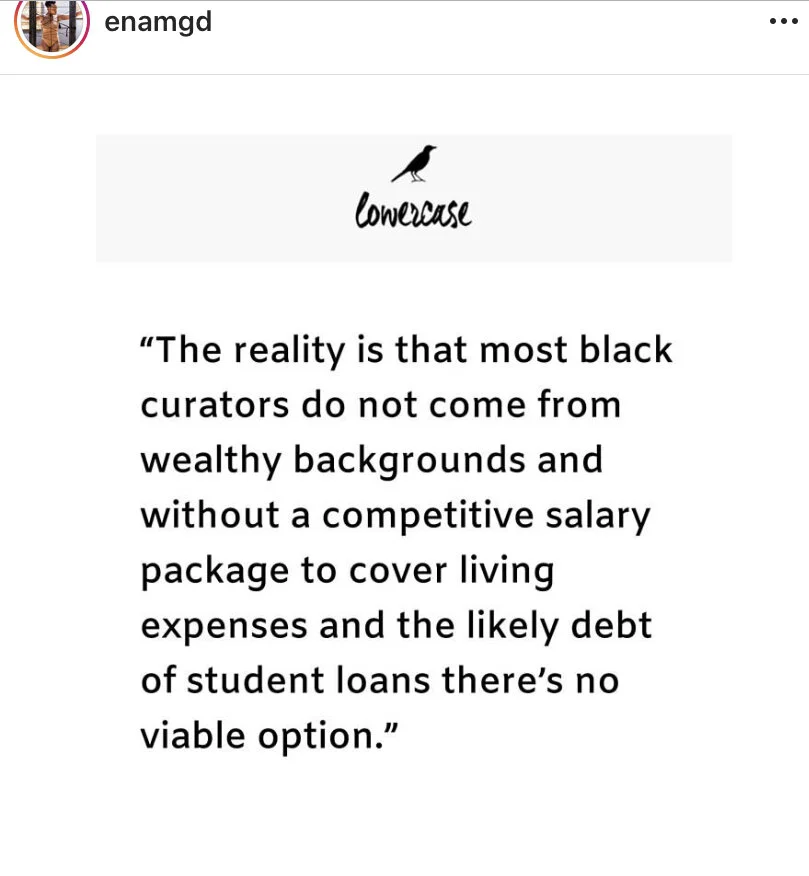
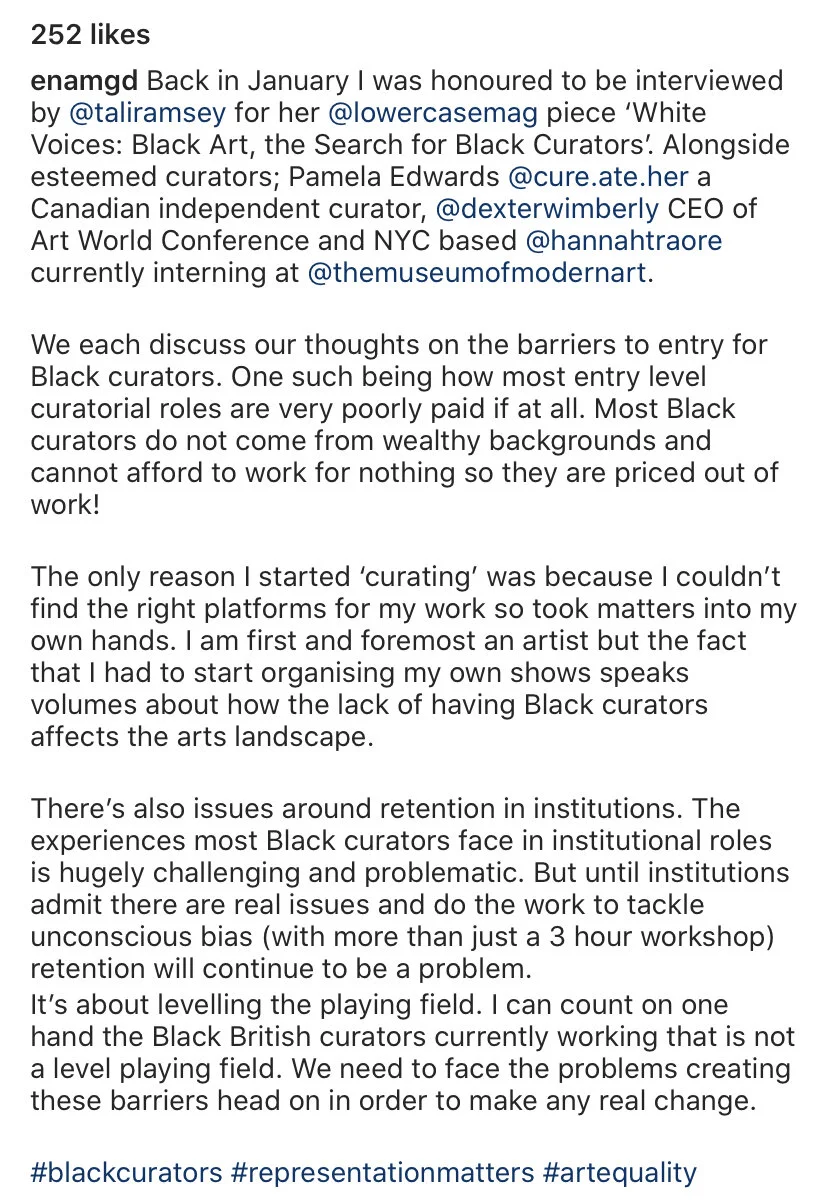
Finally, to bring it back to art history and creative pursuits, I’ve been vibing artist and founder of BBFA collective, Enam Gbewonyo’s words in general. But also this Instagram post (below) about how hard it is for black womxn to make space for themselves in the art world/art industry transported me back to grad school anxieties. In particular, the point about the financial disconnect between the worth of our work and the “traditional” means through which art history has professionalized women.
~Stay tuned for some more book recommendations in the upcoming post “Stay Grounded, Get Lifted” ~ Ohemaa Serwaa